There is a lot happening in health and wellness at the moment, and the more time we spend working in the sector, the more interesting the people side of it becomes.
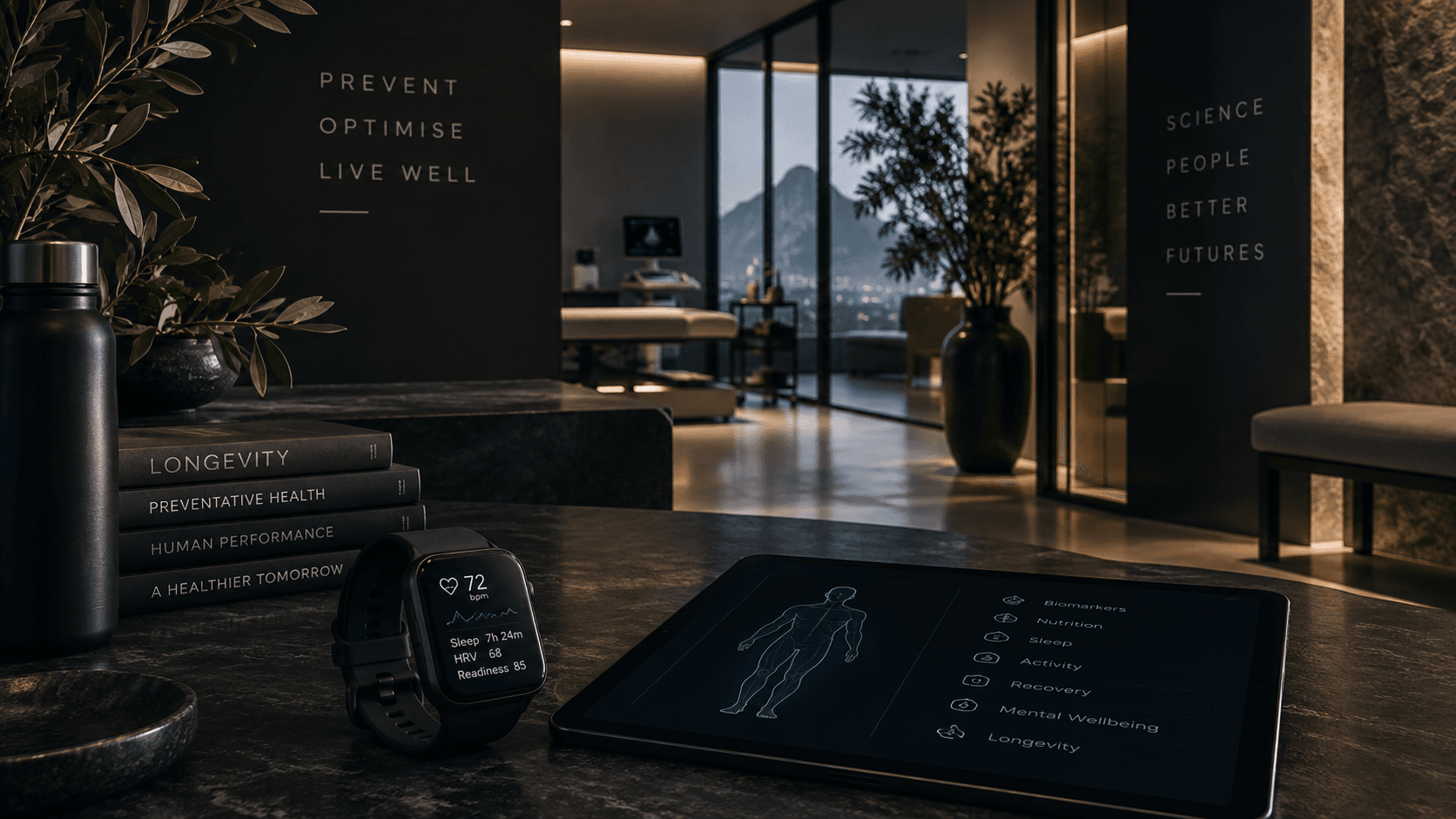
Someone can now walk into a clinic feeling perfectly healthy and leave having discussed blood markers, nutrition, sleep, exercise, family history, wearable data and long-term health risks. Nothing is necessarily wrong with them. That's the point.
Preventative health, longevity, diagnostics, psychology, nutrition, recovery and technology are increasingly becoming part of the same conversation. For those of us who are genuinely interested in our own health, it's fascinating. From a hiring perspective, it creates an interesting challenge too.
As wellness changes, so do the people these businesses need.
A great clinician may need to bring something different
If you're hiring a doctor, qualifications, registration, clinical competence and the appropriate experience obviously come first. What becomes more interesting is how you distinguish between candidates once those requirements have been met.
A doctor working in preventative health may be interpreting diagnostic results while also discussing nutrition, sleep, exercise and lifestyle. The person sitting opposite them might arrive with months of data from a Garmin, Apple Watch or Oura Ring and a collection of questions from the latest health podcast they listened to.
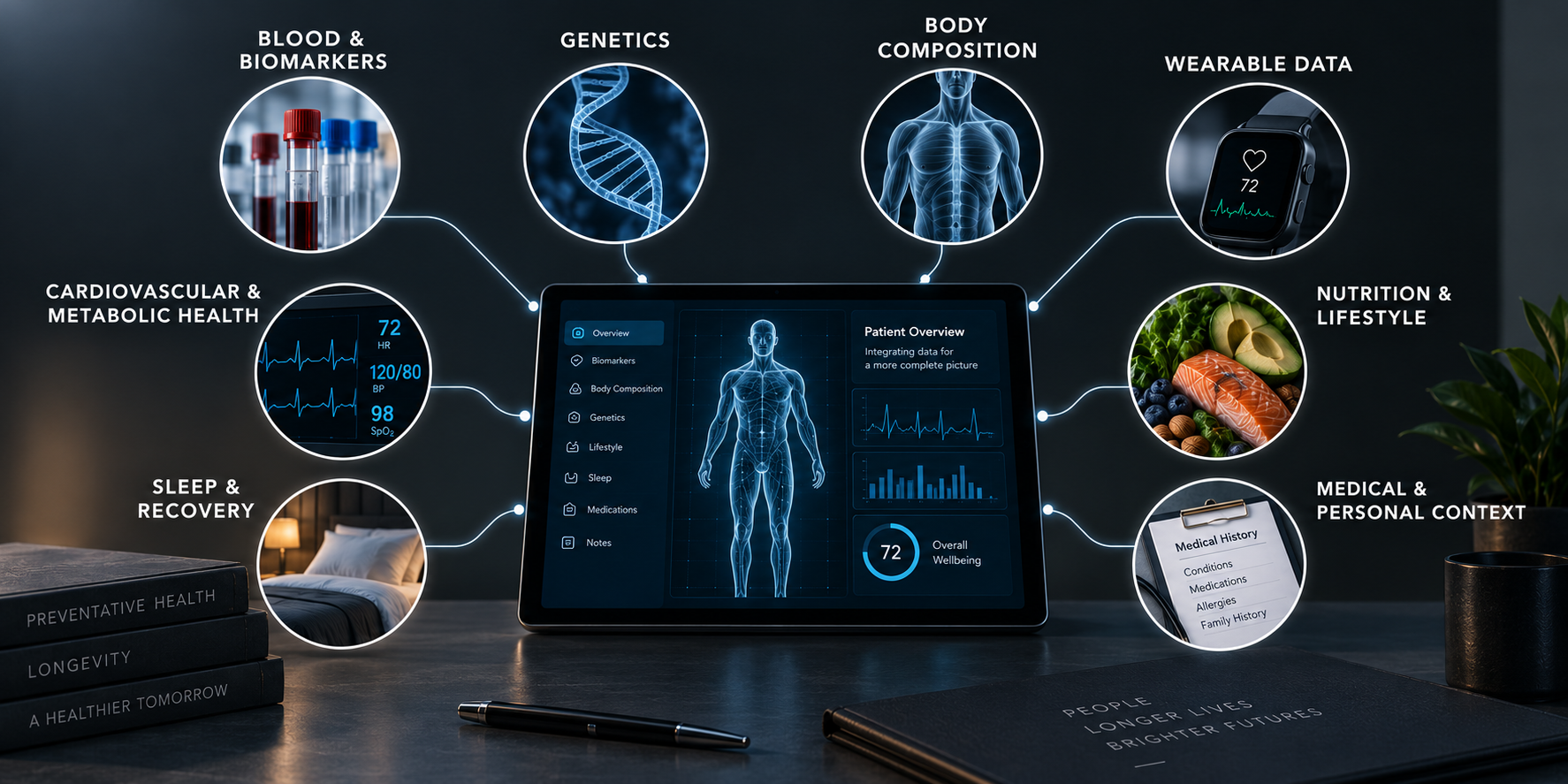
Being able to work through all of that, decide what actually matters and explain it in a way somebody can understand requires more than technical knowledge alone. Communication, curiosity, comfort with technology and the ability to work across disciplines all become important.
The OECD has identified many of these same capabilities, including person-centred communication, interdisciplinary teamwork, adaptive problem-solving, continuous learning and effective use of digital technologies, as healthcare moves towards more integrated and people-centred models of care.
None of this makes clinical expertise less important. It means the environment in which that expertise is being delivered is changing.
And that creates another problem when you start recruiting.
The best candidate might not have "longevity" anywhere on their CV.
We've seen doctors whose profiles don't immediately scream preventative health, but once you look properly at the choices they've made, a pattern starts to emerge. Additional learning around nutrition or exercise, exposure to diagnostics, an interest in lifestyle medicine, patient education, technology or other areas outside conventional acute medicine can tell you far more than a keyword search ever will.
No single line necessarily makes someone a "longevity doctor", but their career may have been moving in that direction for years.
It's something we believe strongly at Opus: assessment needs to go beyond the CV.
Experience tells you what somebody has done. Their trajectory can tell you where they're going.
That distinction matters when you're recruiting into an industry that is itself still developing.
Healthcare can learn from hospitality
The same thinking applies outside clinical roles. Imagine you're building a premium preventative-health clinic and need somebody responsible for the front of the business. The obvious candidate might be someone with years of medical reception experience.
Maybe they are the right person. But first, what are you actually hiring them to do?
Yes, they need to manage appointments, administration and confidential information. They're also responsible for a significant part of how someone experiences the business.
If you've ever stayed at an exceptional hotel, you'll know that great service often doesn't feel like someone is constantly "serving" you. Things simply work. People remember details, communication feels natural, problems are dealt with properly and you feel looked after.
Those capabilities don't suddenly become irrelevant because somebody walks into a health clinic instead of a hotel.
A patient experiences the booking, the welcome, how information is explained, the environment, the way sensitive conversations are handled and what happens after the consultation. Research collated by the US Agency for Healthcare Research and Quality has also found associations between patient experience, particularly communication, and adherence to medical advice and treatment plans.
So if the objective is to create an exceptional patient experience, somebody from luxury hospitality, guest relations, concierge or a premium spa may bring capabilities that are incredibly valuable.
They may need to learn healthcare. But healthcare can learn from them too.
Where science and hospitality meet
This is probably one of the reasons we're enjoying working in this sector as much as we are.
Our experience at Opus comes from very different places. We have a background across life sciences, genomics, diagnostics, healthcare and commercial strategy, but also deep hospitality and guest-experience expertise.
For years, those looked like completely different worlds. In modern wellness, they increasingly aren't.
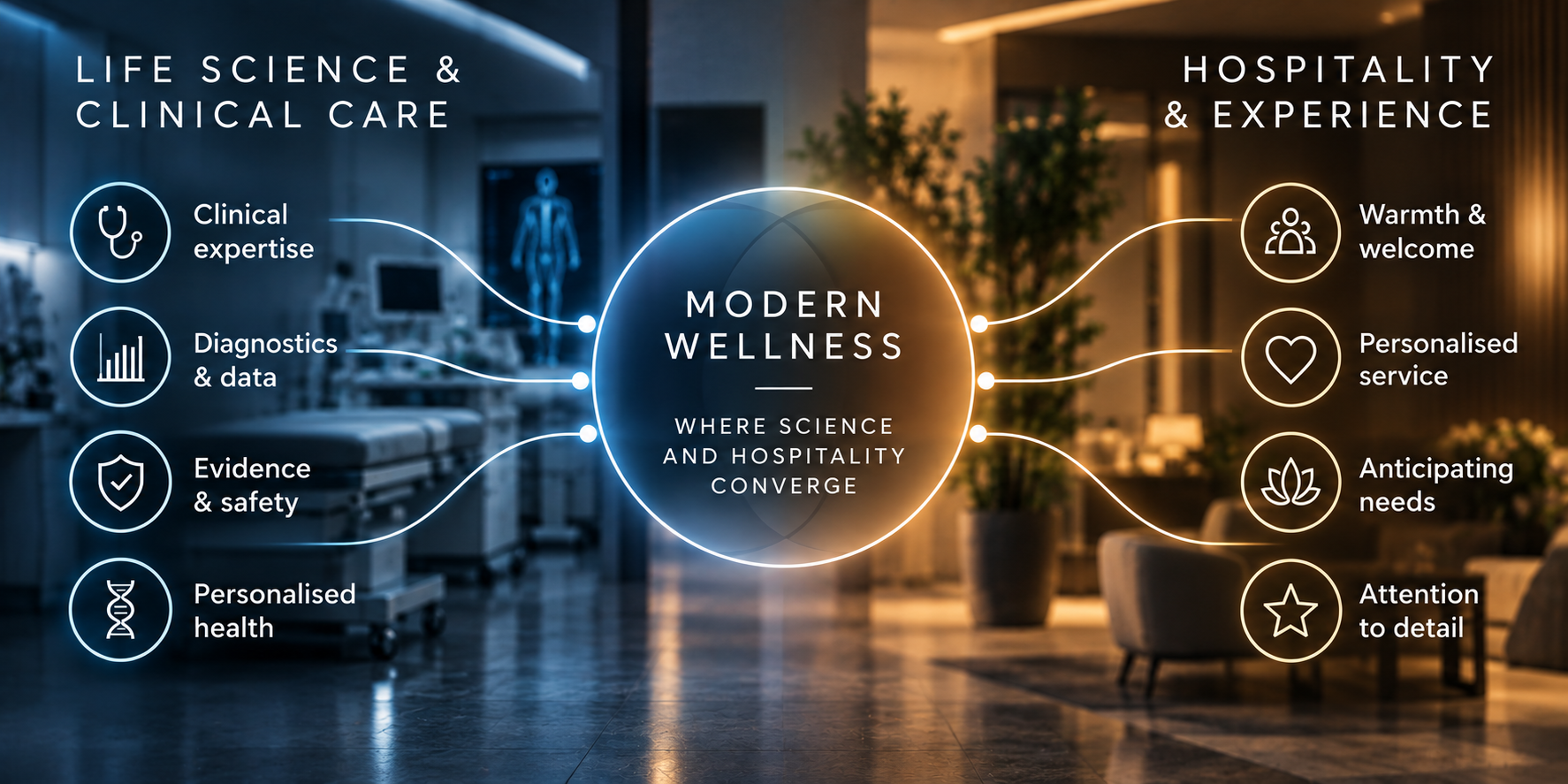
Science understands what sits behind wellness. Hospitality understands how it feels.
The scientific side of the sector is becoming more sophisticated through diagnostics, biomarkers, genomics, wearables, personalised health and technology. At the same time, many of the businesses delivering these services are creating a much more considered and premium experience around healthcare.
You can build a beautiful clinic with exceptional service and an incredible brand, but without clinical and scientific credibility, you have a problem. You can also have brilliant clinicians, sophisticated diagnostics and great technology, but if the experience is cold, confusing or badly managed, you have a different problem.
Modern wellness increasingly needs both.
Technology will probably make that even more important. The World Health Organization's work on digital-health competencies reflects how deeply technology and data are becoming embedded in healthcare, but having more information doesn't automatically make that information useful.
Someone still needs to understand the science, decide what matters and explain it in a way another human being can actually use.
More health data doesn't make the human part less important. It may make it more important.
The impact of a hire rarely stops at the job description
There is another reason we think carefully about this, and it comes from having worked inside businesses ourselves.
We've seen what happens when the wrong people are hired, particularly into positions with influence. The impact rarely stays contained to their own role.
The wrong leader can change which behaviours are rewarded, who gets hired next and whether good people decide to stay. The wrong patient-facing hire can affect how people experience the business. The wrong commercial person can affect growth.
One person can have a surprisingly large effect on the people around them.
Thankfully, the same thing happens in reverse. Great people raise standards, strengthen the team around them, improve the experience for customers or patients and help businesses grow.
This is why we don't think recruitment is simply about finding someone who can technically perform the job. You also need to understand the environment they're entering, the people around them and what the business is actually trying to build.
The question isn't only whether someone can do the job. It's what happens to the business once they join it.
For wellness businesses, answering that question may mean looking in some less obvious places.
The next generation of these businesses will need doctors, psychologists, nurses and nutrition professionals, but also scientists, hospitality people, patient-experience specialists, operators, commercial leaders and technologists. Some will have spent years in wellness. Others won't.
We're already hiring across clinical, operational and patient-facing roles in this market and continuing to build our network across South Africa. What we're finding is that the interesting part isn't simply building a bigger database of people with "wellness" somewhere on their CV. It's understanding the business well enough to know who could actually make it better.
As healthcare, science, technology and experience continue to move closer together, the workforce will naturally do the same.
Sources & Further Reading
OECD. Skills for the Future Health Workforce: Preparing Health Professionals for People-Centred Care.
View publicationAgency for Healthcare Research and Quality (AHRQ). The Case for Improving Patient Experience.
View resourceWorld Health Organization. Competency Frameworks and Standards for Digital Health: A Landscape Analysis.
View publication
Opus Insight
Observations in this article are also informed by Opus Recruiter's current work across the health and wellness sector, including searches across clinical, operational and patient-experience roles and our ongoing conversations with businesses and professionals in the market.