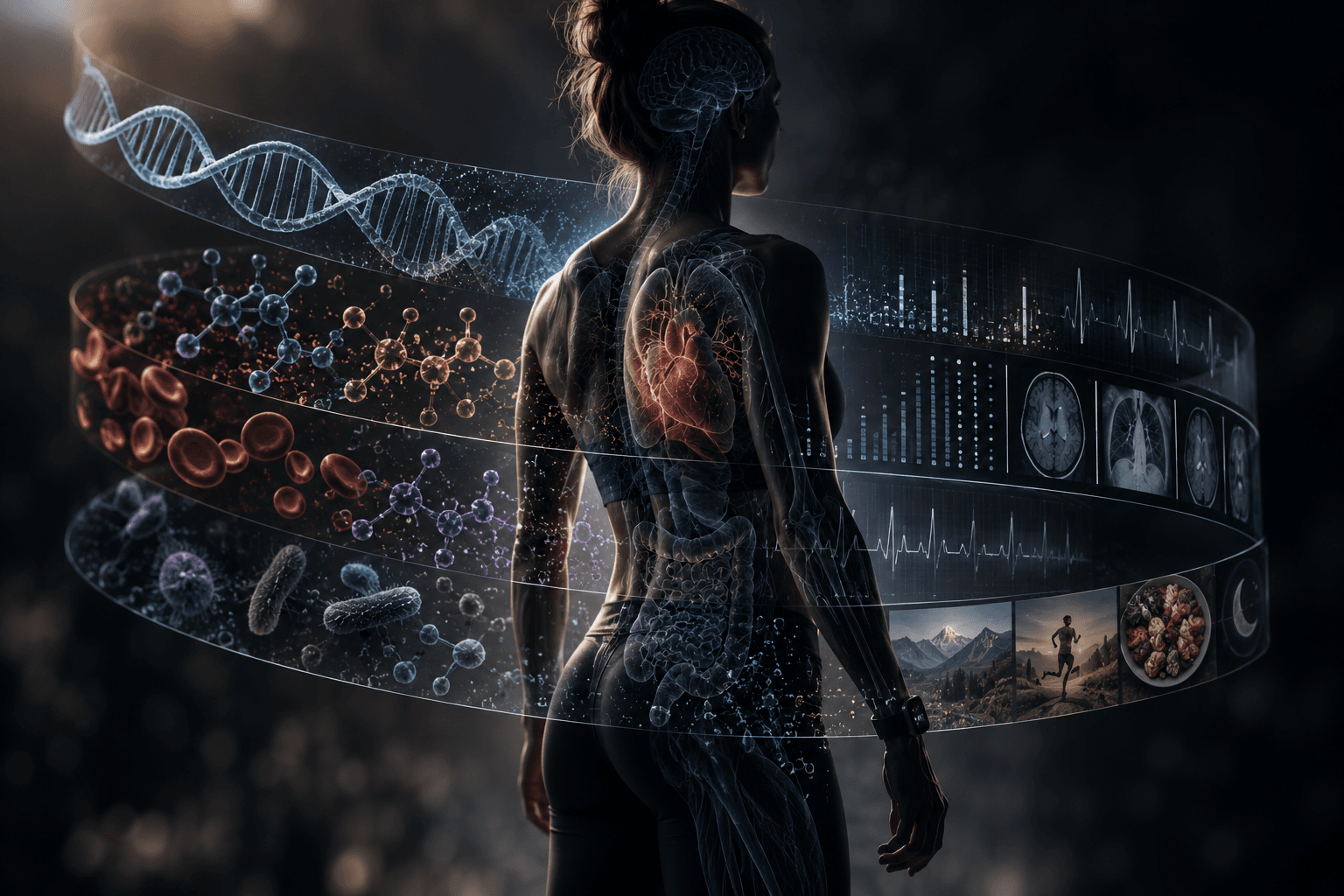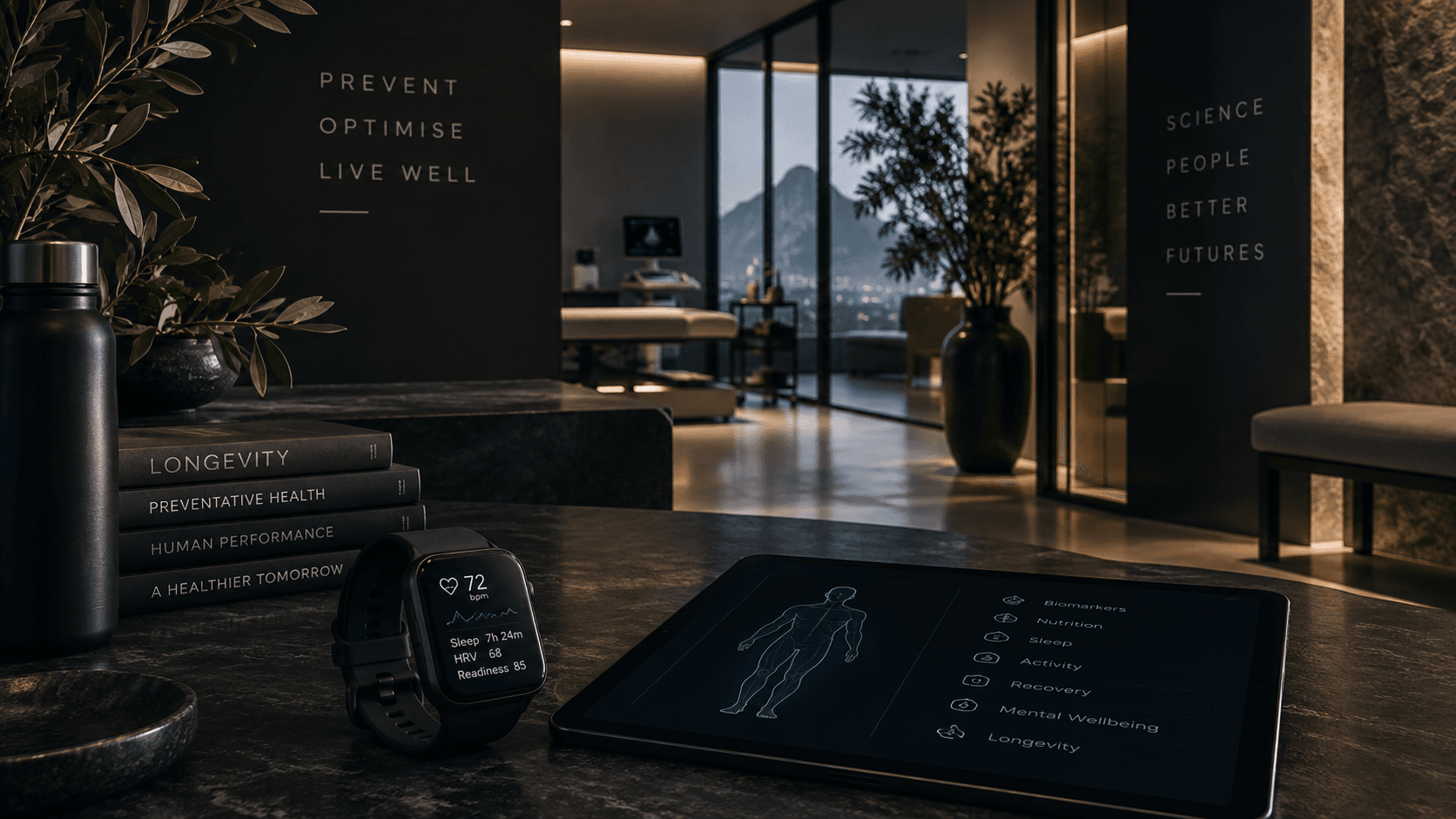
At first glance, science and hospitality could not be more different.
Science is built on evidence, precision and a constant search for understanding.
Hospitality, on the other hand, is deeply human. It is about anticipation, emotion and the ability to create an experience that makes someone feel understood without them having to ask.
One asks, How does this work?
The other asks, How does this feel?
For years, these industries have existed in almost entirely separate worlds. Yet, the more closely we watch where the market is moving, the more obvious it becomes that they are beginning to converge - and nowhere is that more apparent than in wellness.
Wellness has moved far beyond the spa
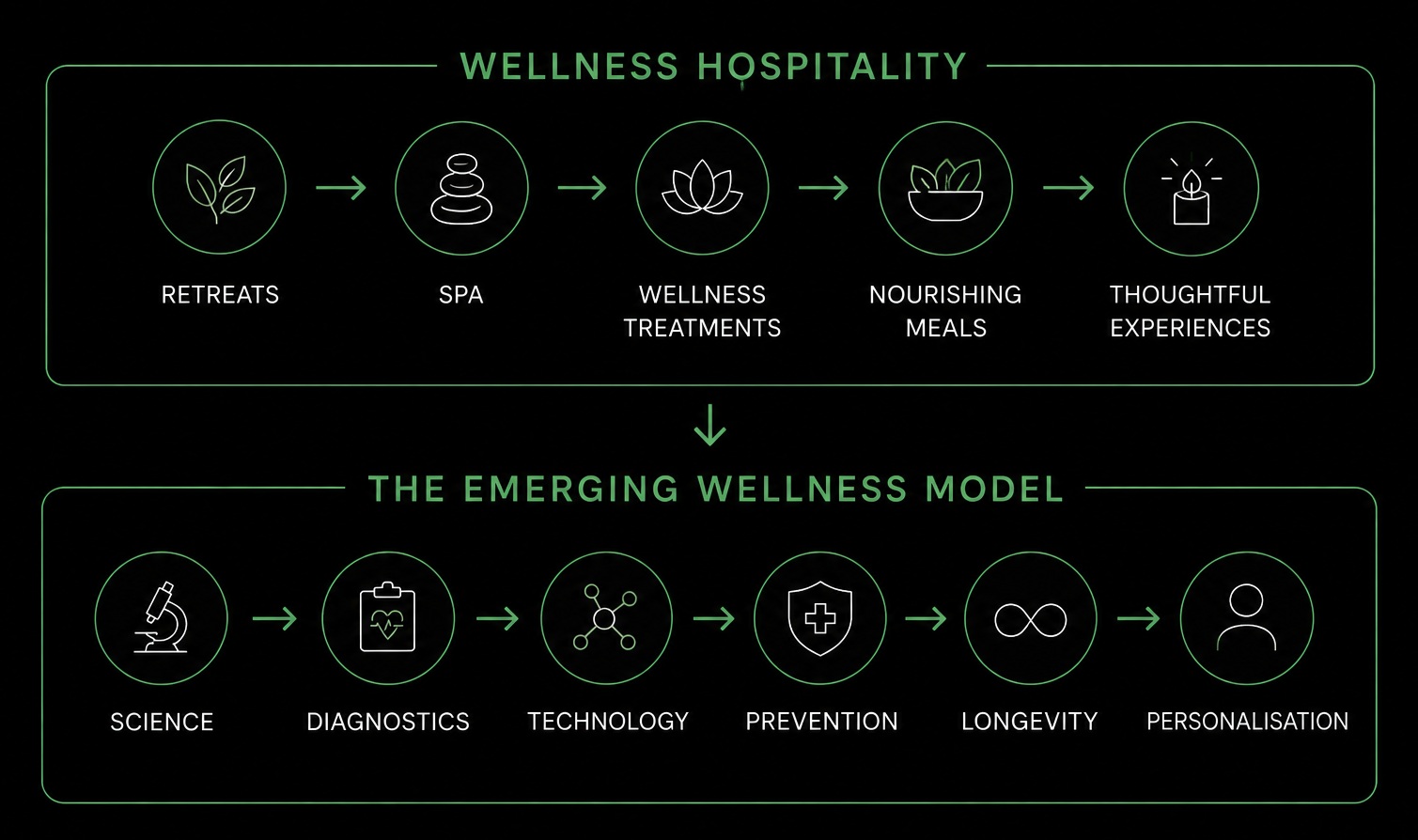
For years, wellness in hospitality had a fairly familiar shape: an all-inclusive, curated experience combining restorative spa treatments, sunrise yoga classes, a carefully considered healthy menu and thoughtful experiences designed to help guests slow down, switch off and reconnect.
Those experiences remain an important part of wellness, but the category has expanded far beyond relaxation and escape. Wellness is becoming more sophisticated, more personalised and increasingly informed by science.
The Global Wellness Institute estimates that the global wellness economy reached $6.8 trillion in 2024 and is projected to approach $9.8 trillion by 2029.
This growth is increasingly being driven by areas such as preventative health, longevity, mental wellbeing, wellness real estate and personalised approaches to health.
What is particularly interesting is the way science is moving into the wellness experience.
Walk into some of the newer wellness centres emerging around the world and you can find technologies and services that would once have felt much more at home in a medical or scientific environment: hyperbaric oxygen, red-light therapy, PEMF, advanced recovery technologies, diagnostics, nutritional interventions and psychological support.
The point isn't that every emerging treatment will ultimately prove equally valuable. The bigger story is the direction of consumer demand.
People are becoming more interested in understanding their health, investing in longevity and taking a proactive approach to how they feel and function.
And as that happens, wellness is becoming less about a single treatment and more about the whole experience surrounding it.
When science enters the guest experience
If we look at the travel industry, the direction of this shift becomes even more apparent. Hospitality has always been closely connected to wellbeing, but we are now seeing established travel businesses move wellness beyond the traditional spa and into territory that would once have belonged almost exclusively to healthcare, science and medicine.
MSC offers an interesting example.
In 2023, Mediclinic International was acquired by a consortium comprising Remgro and SAS Shipping Agencies Services, a wholly owned subsidiary of MSC Mediterranean Shipping Company. More recently, MSC Cruises announced a new wellness concept across its fleet that brings together luxury spa experiences with advanced skincare, AI-powered skin analysis and medical wellness services including IV therapy and aesthetic treatments.
On the surface, these may seem like very different developments. But look at them through the lens of the consumer and a much more interesting picture emerges.
The modern traveller is increasingly looking for more than a destination. They want experiences that support how they feel, how they recover, how they look and, increasingly, how they think about their long-term wellbeing. The traditional boundaries between a holiday, a spa, a wellness retreat and a health experience begin to feel less important.
And that changes the role of hospitality.
The guest doesn't necessarily care which industry a particular service belongs to. They aren't thinking, “This is the medical component and this is the hospitality component.” They simply experience one journey - from the moment they arrive, through the treatment or service itself, to the way they are looked after afterwards.
And this is where the convergence becomes really interesting:
the science may determine what is possible, but the experience determines how people engage with it.
The businesses that can bring those two things together have an opportunity to create something very different; not just a treatment, not just a luxury experience, but a new kind of wellness proposition built around both what we know and how people experience it.
What can science and hospitality teach each other?
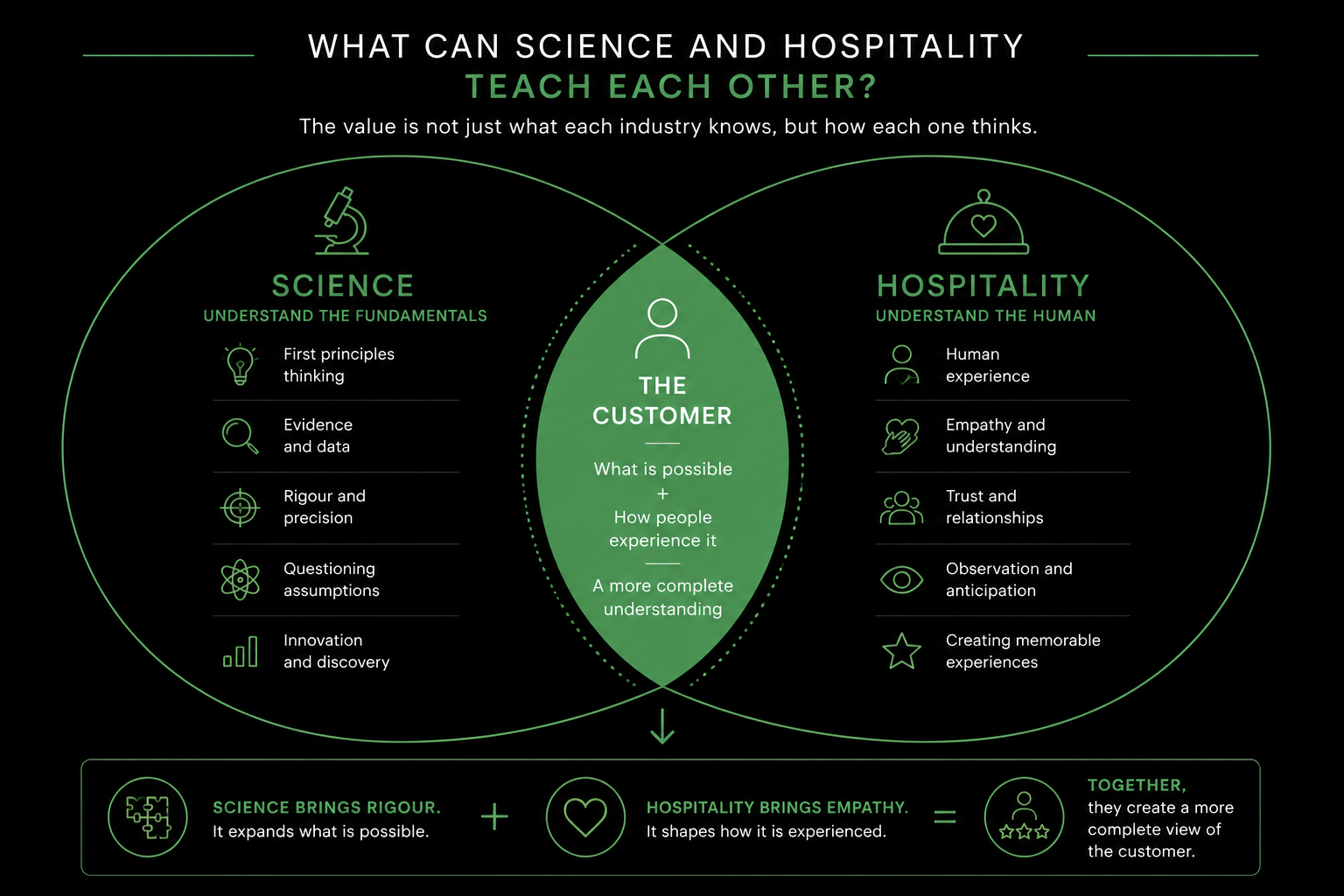
Science brings more than technical knowledge. It brings a way of thinking. First-principles thinking challenges assumptions, strips a problem back to its fundamentals and asks what we are actually trying to solve. Applied to hospitality, that can be surprisingly powerful. Instead of accepting “this is how hotels work”, you start asking why; why does the guest behave this way, what is the real commercial problem, and what would we build differently if we started from the fundamentals?
Hospitality brings the other side of the equation: an understanding of human experience. It teaches you to look beyond the product or service and consider how people encounter it - what makes them trust you, what makes them return and what turns a functional interaction into an experience they remember.
Science brings rigour. Hospitality brings empathy. Together, they create a more complete view of the customer.
And this isn't only changing the businesses being built. It is changing the people those businesses need.
Why this matters in recruitment
As these industries converge, the talent required to operate within them becomes more complex. A Commercial Director in genomics and a Commercial Director in hospitality may share a title, but the worlds they operate in are fundamentally different.
Their customers, commercial models, technical requirements and measures of credibility are all different.
Which is why we believe industry expertise matters.
Recruitment shouldn't simply be about matching a CV to a job description. The more specialised the environment, the more important it becomes to understand the world behind the role; its customers, its challenges, its language and the way the business actually creates value.
The question isn't only, “Can this person do the job?”
It's “Do they understand the world in which this job exists?”
Two industries. Two perspectives. One advantage.
This is ultimately why Opus has chosen to work across two seemingly very different worlds: science and hospitality.
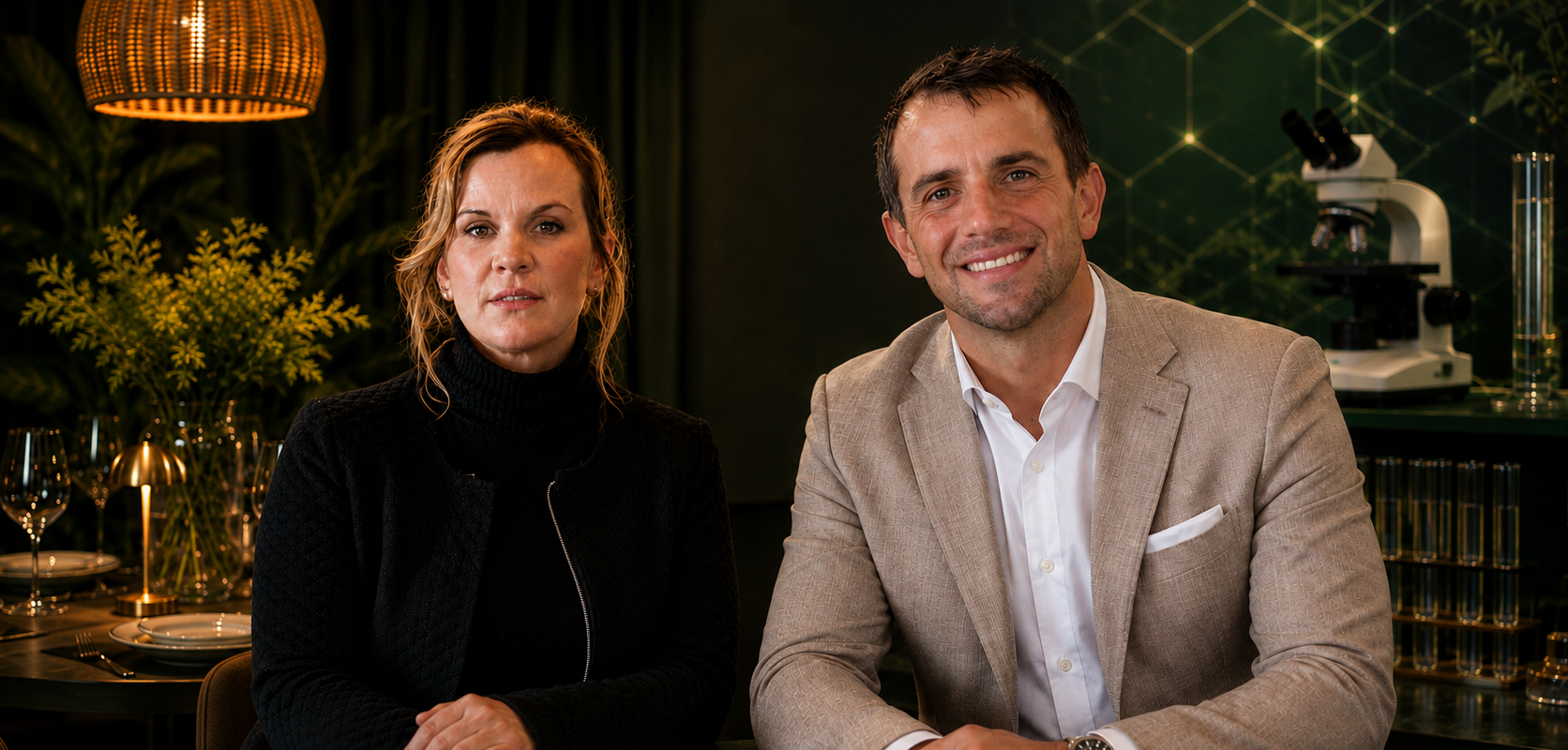
At the heart of that focus are siblings Bret Wurdeman and Sharlee Moriarty, who work closely together across the business, bringing two very different professional perspectives to the same question:
what does it take to find the right people for businesses operating in increasingly complex and evolving industries?
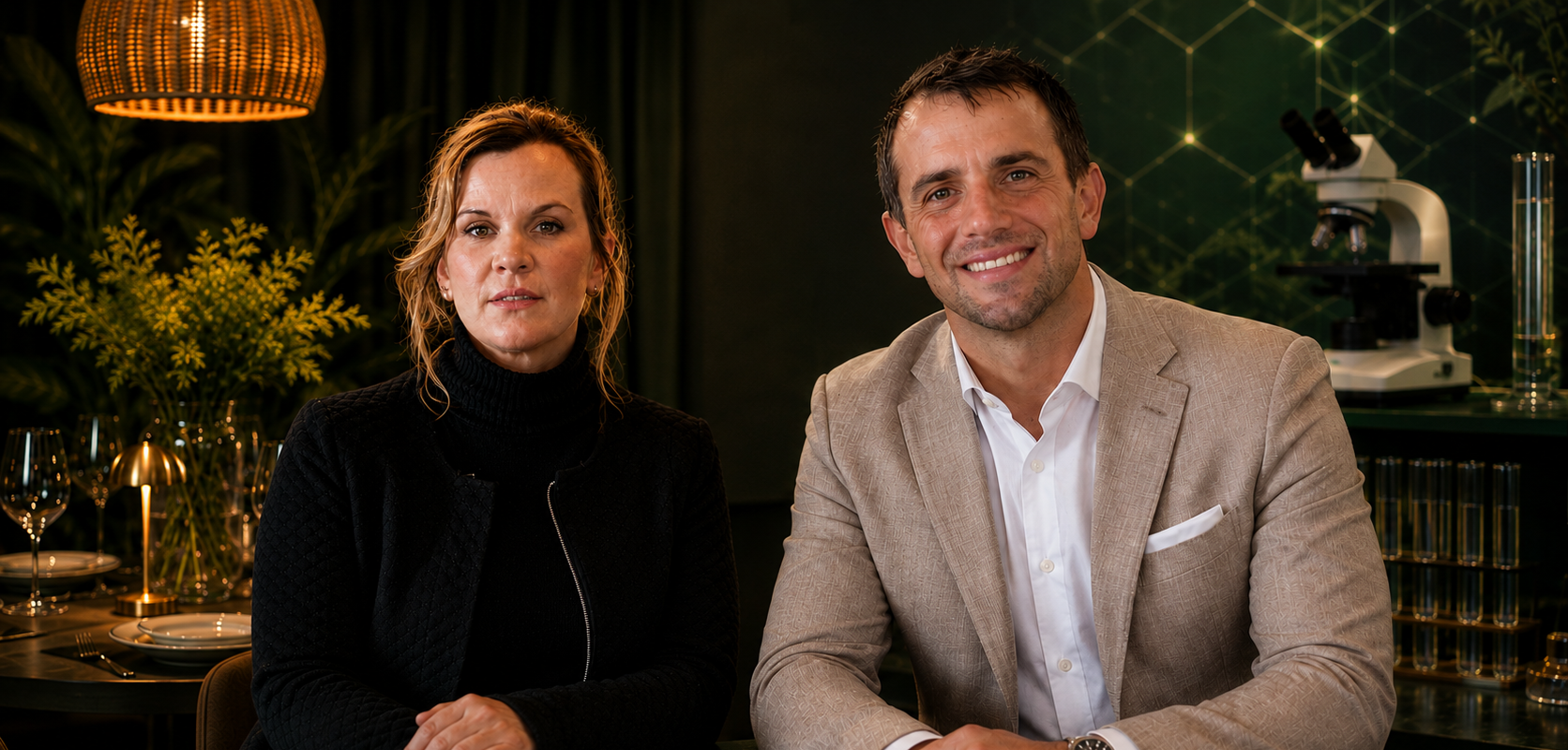
Bret Wurdeman, Commercial Director, brings more than a decade of experience across life sciences and genomics, commercial strategy, sales and market expansion. His understanding of the science landscape is underpinned by the first-principles thinking that is fundamental to working in a highly technical and constantly evolving environment. He understands the complexity behind the products, the commercial realities of the sector and the caliber of thinking required to operate credibly within it.
Sharlee Moriarty ,Chief Marketing Officer, brings more than 18 years of experience across marketing, commercial strategy and business growth, with a particular focus on hospitality. Her perspective is rooted in the guest experience - understanding why people choose a business, what they experience when they arrive, what builds trust, what creates connection and ultimately what makes them return.
They are very different perspectives. And that is precisely where the advantage lies.
One understands the complexity of the science.
The other understands the complexity of the experience.
Working closely together means these perspectives don't exist in isolation - they constantly inform one another. Bringing the rigour of science into the understanding of people and experience, while bringing a deep understanding of the customer and commercial environment into increasingly science-led industries.
And perhaps that is what makes their focus on these two industries so compelling.
They aren't simply interested in the fact that science and hospitality are converging. They are fascinated by what happens when they do - and by the businesses, experiences and people that emerge in the space between them.
And somewhere between the two sits wellness.
If you’re building a business in science, hospitality or the evolving wellness space, and looking for exceptional people who bring more than the skills listed on a job description, we’d love to hear from you.
To discuss your next hire or recruitment requirement, contact us at:
marketing@opusrecruiter.com