

If you're a qualified spa therapist in South Africa, you may have noticed something frustrating when looking at job adverts: Two jobs with almost identical titles can offer completely different salaries.
A Spa Therapist might earn R12,000 at one business, R20,000 at another, and potentially R30,000+ in a high-end destination spa once commission, tips and benefits are included.
So what is a fair salary?
The answer depends on much more than your qualification.
Location, experience, type of spa, level of responsibility, commission structure, accommodation, meals, tips and the type of clientele all influence what a therapist can realistically earn.
This guide breaks down the South African spa salary market and looks at what you should consider when comparing opportunities.
What does a Spa Therapist actually earn?
As a broad market guide, you can think about spa therapist salaries in the following ranges:
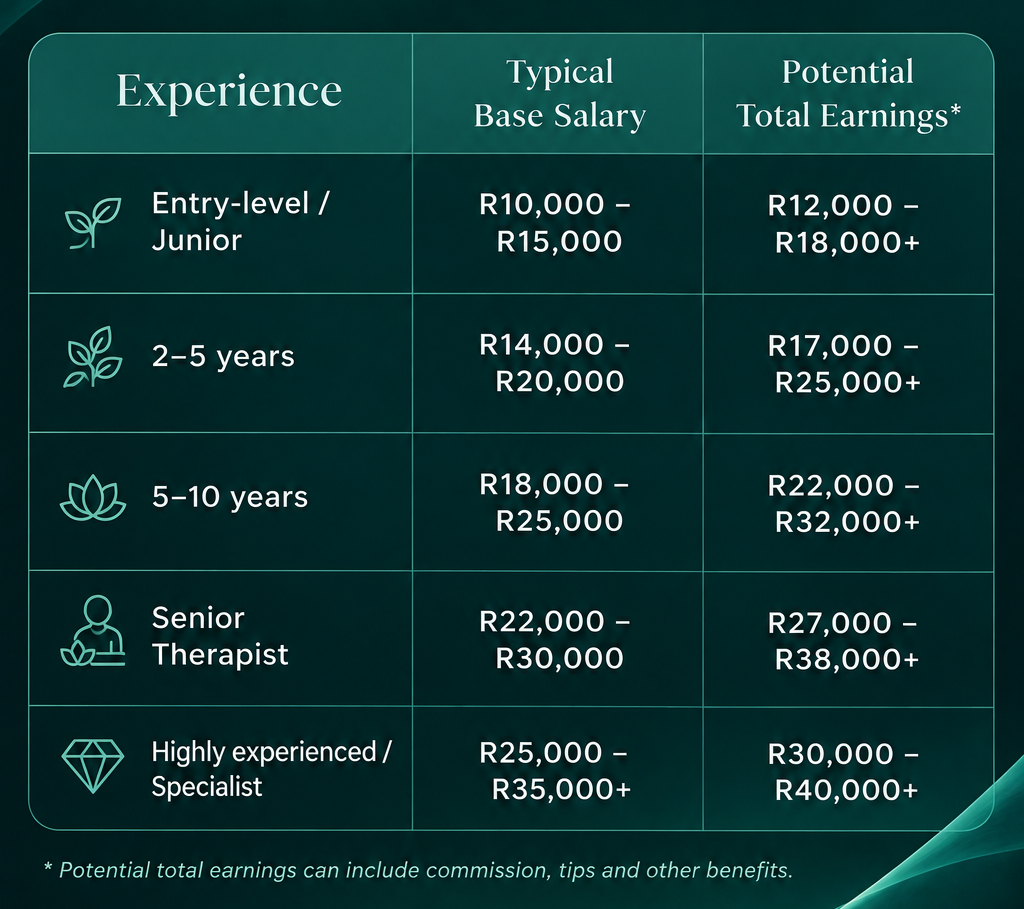
The important thing to understand is that base salary isn't necessarily your actual earning potential.
A therapist earning R15,000 basic with strong commission, good tips and accommodation may ultimately be financially better off than someone earning R20,000 basic with very little additional income and a high cost of living.
Why do spa salaries vary so much?
There is no single salary for a Spa Therapist in South Africa. Where you work, the type of spa, your experience, qualifications and the way you are rewarded can all make a significant difference.
1.) Location Matters
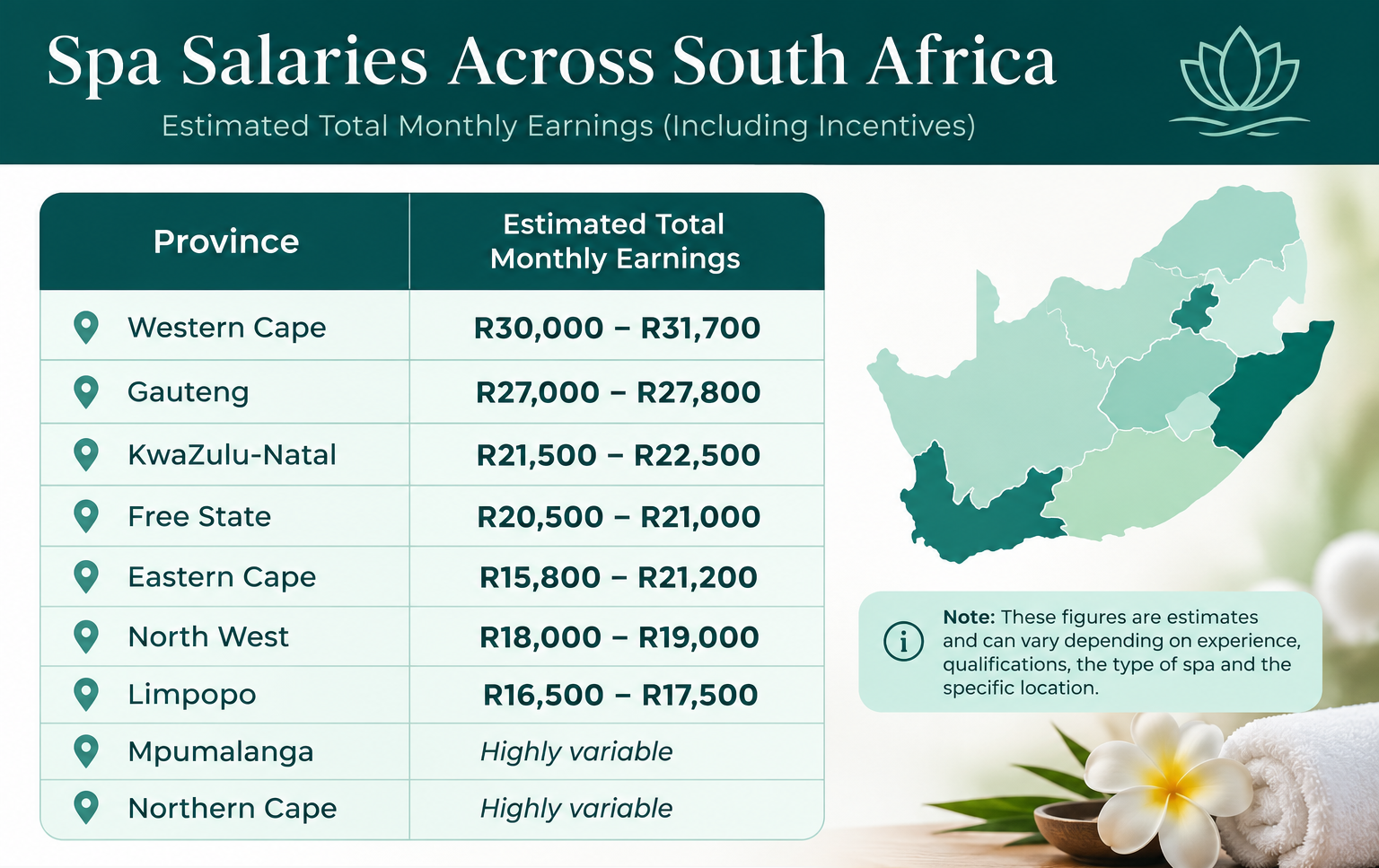
Geography has a major influence on earning potential. Therapists working in cities such as Cape Town, or in established tourism areas such as the Garden Route, may have access to higher-paying opportunities than those working in smaller inland towns.
This is influenced by the cost of living, tourism, the type of clientele and the number of luxury hotels, resorts and spas in the area.
According to recent research we found that average earning across the provinces can range as follows;:
But It's Not Just About the Salary...
Where you work can have a significant impact on what your salary actually means in day-to-day life.
A therapist earning R25,000 in Cape Town is not necessarily better off than someone earning R20,000 in a smaller city or town. Housing, transport, food and general living costs can vary considerably between locations.
For example, current cost-of-living data estimates Cape Town to be around 45% more expensive than Bloemfontein, with housing showing one of the biggest differences.
That means a higher salary does not automatically translate into a higher standard of living.
Think about what is left after your basic costs:
Imagine two therapists:
Therapist A - Cape Town
Salary: R25,000
Higher rent
Higher transport costs
Higher general living expenses
Therapist B - Smaller town / destination spa
Salary: R20,000
Lower rent
Lower living costs
Possibly accommodation and meals included
Therapist B may actually have more disposable income at the end of the month, despite earning R5,000 less.
And this is particularly relevant to destination spas and lodges. A salary package that includes accommodation and meals can have significant real-world value. Instead of looking at R20,000 and thinking "that's low", you need to ask what the employee would otherwise have to spend on rent, utilities and food.
2.) The Type of Spa Makes a Difference
A therapist working in a small beauty business is not necessarily going to have the same earning potential as someone working in a five-star hotel or luxury lodge.
Retail and beauty businesses often offer a lower basic salary, with retail or product commission providing additional income.
Day spas can offer a stronger base salary, with treatment commission, retail commission and tips adding to total earnings.
Hotel and luxury spas may offer access to higher-value treatments, international guests, tips, commission, staff benefits and greater opportunities for career progression. For example, a 2025 luxury hotel Spa Therapist vacancy in Cape Town advertised a basic salary of around R12,600 plus commission.
Destination spas and lodges work slightly differently. The cash salary may be lower than a city-based role, but accommodation and meals are often included. This can make a lower salary considerably more valuable because the employee has fewer living expenses.
3.) Experience and Qualifications
Experience is important, but so is what you can actually do.
A therapist with specialist skills in areas such as advanced skincare, aesthetics, reflexology, aromatherapy or specialised massage can have greater earning potential than a therapist with the same number of years of general experience.
Qualifications also become increasingly important as you progress. Additional training can open the door to more advanced treatments, greater responsibility and senior positions.
4.) Commission Can Change the Picture
One of the biggest mistakes when comparing spa salaries is looking only at the basic salary.
A position offering R20,000 basic may initially look better than one offering R15,000 basic plus commission and tips. But if the second role has a strong client base and a good commission structure, the total monthly income could be considerably higher.
When considering a job, ask what the average therapist actually earns in commission, rather than simply whether commission is available.
Commission can be based on treatments, retail sales, packages or other sales targets, and structures vary significantly between employers.
Don't Forget Tips...
Tips can also make a meaningful difference, particularly in luxury hotels, lodges and destination spas where therapists work with higher-spending or international guests.
A 10% tip is commonly used as a guideline for good service at South African spas, although tipping is discretionary and not compulsory.
This means two therapists on the same basic salary can end up taking home very different amounts each month.
Look at the Whole Package
Ultimately, the best-paying job isn't always the one with the highest basic salary.
When comparing opportunities, look at the total package:
Basic salary + commission + tips + accommodation + meals + other benefits.
A R18,000 salary that includes accommodation and meals could, for example, be more financially attractive than a R25,000 salary where the employee is paying rent, transport and groceries.
For both employers and therapists, the real question isn't simply "What is the salary?" It's "What is the total value of the opportunity?"
Looking for your next opportunity or your next hire?
At Opus Recruiter, we believe great recruitment starts with understanding the market, the role and the people behind it.
Whether you're a hospitality business looking to build your team or a spa and wellness professional looking for your next opportunity, we're here to help connect the right people with the right opportunities.